
As deputy governor, Patel headed the RBI panel to draft the monetary policy report, which became the basis of the ongoing reforms at the apex bank

Retail inflation eased to an 11-month low of 4.83 per cent in April as prices of some kitchen items declined though overall food basket firmed up marginally, according to a government data released on Monday. The Consumer Price Index (CPI)-based retail inflation was 4.85 per cent in March. It was 4.7 per cent in April 2023.

The finance ministry has cautioned that global and regional uncertainties and domestic disruptions may keep inflationary pressures elevated in the coming months, warranting "greater vigilance" by the government and the Reserve Bank of India (RBI). "Russia's decision to terminate the Black Sea grain deal, along with dry conditions in major wheat-growing areas, caused a price spike in cereals. Domestic factors like white fly disease and an uneven distribution of monsoon exerted pressure on vegetable prices in India," the ministry said in its latest Monthly Economic Report for July, released on Tuesday. However, the report maintained, the recent price surge in certain food items "is expected to be transitory". "Tomato prices are likely to decline with the arrival of fresh stocks by the end of August or early September.

The Reserve Bank will have to continue to tighten its monetary policy stance to arrest the runaway inflation numbers, which is expected to harden further in the medium-term on account of the rising commodity prices in international markets, a senior economist said on Friday.

The Reserve Bank on Wednesday announced the increase of the UPI Lite wallet limit to Rs 5,000 and per-transaction limit to Rs 1,000, in order to encourage wider adoption of the popular instant payment system through mobile phones. A limit of Rs 500 per transaction and an overall limit of Rs 2,000 per UPI Lite wallet, is presently applicable, with the facility of auto-replenishment. Unveiling the October bi-monthly monetary policy, Reserve Bank Governor Shaktikanta Das also said the per-transaction limit in UPI123Pay will be enhanced to Rs 10,000 from the current Rs 5,000.
The continuing global uncertainity has complicated the fight against inflation, opined Reserve Bank Deputy Governor Michael Debabrata Patra during the Monetary Policy Committee meeting held on February 8. According to the minutes of the MPC meeting released on Wednesday, RBI Governor Shaktikanta Das also mentioned that there is considerable uncertainty due to a host of global factors such as rising non-oil commodity prices. The RBI on February 8 hiked the key short-term lending rate by 25 basis points to 6.5 per cent, citing sticky core inflation.
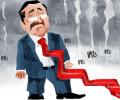
Fundraising via initial public offers (IPOs) dropped 52.2 per cent to $147.2 billion in the first eight months of calendar year 2023 (CY23), suggests a recent report by GlobalData, a London-based analytics and consulting company. At the country level, the report suggests, India topped the charts with 152 transactions worth $3.8 billion during this period, primarily due to a higher number of SME IPOs, followed by the US with 99 deals totaling $16 billion, while China ranked third with 88 transactions worth $32.3 billion. "An analysis of GlobalData's Deals Database reveals that there were 750 IPO listings registered with an aggregate deal value of $147.2 billion in the first eight months of 2023 on the stock exchanges worldwide.

Analysts at Barclays pitched for a 0.25 per cent cut to generate demand advising the central bank to throw caution to the wind.

Among the Sensex firms, Adani Enterprises and Adani Ports sustained their gaining momentum and traded higher by 4.40 per cent and 4.37 per cent, respectively. BPCL, Axis Bank, Mahindra & Mahindra and SBI were the other major gainers. On the other hand, HCL Tech, Infosys and Bajaj Auto traded in the negative zone with a loss of up to 1.54 per cent.

Other bankers who attended the meeting at Mint Street included SBI chairman-cum-managing director O P Bhatt, ICICI chief executive and MD Chanda Kochhar, Standard Chartered's India head Neeraj Swaroop and HDFC Bank MD Aditya Puri, among others.

Investor wealth eroded by Rs 4.46 lakh crore in a single day on Friday with the benchmark BSE Sensex tanking more than 1 per cent in line with global stocks rout. The 30-share BSE Sensex plunged 885.60 points or 1.08 per cent to close at 80,981.95 with 25 of its components declining and five ending with gains. During the day, it nosedived 998.64 points or 1.21 per cent to hit an intra-day low of 80,868.91.

The paper seems to be suggesting strongly that the tight target range be maintained even as the central bank is all set to miss the target range for three consecutive quarters because of the Covid crisis.
Wholesale inflation fell to a 4-month low of 1.31 per cent in August due to a decline in prices of vegetables and fuel, even though onion and potato prices spiked, according to official data released on Tuesday. Wholesale price index-based inflation fell for the second straight month in August after it hit a high of 3.43 per cent in May. Inflation in July was 2.04 per cent. In August last year, WPI inflation was (-) 0.46 per cent.
The wholesale price index (WPI)-based inflation rose in December at 0.73 per cent mainly due to a sharp rise in food prices. The WPI inflation was in the negative zone from April to October and had turned positive in November at 0.26 per cent.

India's prices are rising faster than many of its emerging market peers. The country's inflation print for May at 4.25 per cent is a marked reduction from the levels seen in May 2022 (7.04 per cent). However, even though the inflation rate remains within the Reserve Bank of India's medium-term target of 4 per cent, with a 2 per cent margin on either side, it continues to be higher than China, Russia, and Brazil.

The Indian economy appears to have slowed down in 2018-19 due to lower private consumption, tepid growth in fixed investment and muted exports, a finance ministry report has said.

'The prime minister's comment on 'revdi culture' was welcome. But I am disappointed he did not follow up on that.' 'All political parties, including the BJP, have been guilty of this.' 'Now, Modi's guarantees, the Congress's 'nyay' path and both ruling and Opposition parties are vying with each other for freebies in my home state Andhra Pradesh.'

Crypto assets should not be granted official currency or legal tender status, the much-awaited synthesis paper by the International Monetary Fund (IMF) and Financial Stability Board (FSB) has said ahead of the G20 leadership summit under India's presidency. However, the report has argued against a blanket ban on activities linked to crypto assets, explaining that such a move can be costly as well as technically demanding to enforce. Central banks should avoid holding crypto assets in their official reserve as they pose a risk to monetary and global financial stability, according to the synthesis paper.

Finance Minister Nirmala Sitharaman on Thursday said inflation management cannot be "singularly" left to the monetary policy as a majority of activities are outside its purview in the current context. Speaking at a seminar organised by economic think-tank Icrier, the finance minister said that both the fiscal policy and the monetary policy have to work together to contain inflation. Consumer price index (CPI) based inflation or retail inflation is ruling above the Reserve Bank's comfort level of 6 per cent since January.

The RBI, which has been keeping rates at an elevated level citing high inflation, wants it to come down to 6 per cent by January 2016.

In October 2024, Jindal Stainless challenged a Goods and Services Tax (GST) notice in the Delhi high court. It was about corporate guarantees issued to related parties by its former group company, Jindal Stainless (Hisar), before their merger in March 2023.
At the same time, banking sources close to the development said the central bank could raise its growth target from 5-6 per cent to 6.5 per cent to accommodate the impact of an improving monsoon and the growth impetus provided through various fiscal and monetary stimulus packages earlier in the year. The cautious outlook on interest rates is primarily to accommodate rising inflationary expectations in the economy.
Retail inflation declined to a three-month low of 5.02 in September, mainly due to easing food prices, according to the government data released on Thursday. The inflation has come back to the Reserve Bank's comfort level of below 6 per cent after a gap of two months. The inflation based on the consumer price index (CPI) was 6.83 per cent in August and 7.41 per cent in September 2022.

Markets ended lower on Monday as investors turned cautious and booked profits ahead of the RBI monetary policy.

'The central bank has highlighted that the slowdown in growth has been limited to a few sectors and overall growth is expected to pick up in the second half of the year.'

India's GDP growth will slow down to 5.5 per cent in FY24 from the 6.9 per cent expected in the current fiscal 2022-23, a Swiss brokerage said on Wednesday. The slowdown was attributed to slowing global growth and tightening of monetary policies in the report by economists at UBS India. It said India will be among the "lesser affected economies" in the world, but made it clear that the world's fifth largest economy is not immune from global headwinds.

The index could be vulnerable to a bigger fall given the present market dynamics.

The Asian Development Bank (ADB) on Wednesday slashed India's GDP growth forecast for FY23 to 7 per cent from the earlier estimate of 7.2 per cent mainly on account of higher inflation and a tight monetary policy. India's economy grew 13.5 per cent year-on-year in the first quarter of 2022-23, reflecting strong growth in services, ADB said in its second supplement to Asian Development Outlook Report 2022 (ADO 2022). "However, GDP growth is revised down from ADO 2022's forecasts to 7 per cent for FY2022 (ending March 2023) and 7.2 per cent for FY2023 (ending March 2024) as price pressures are expected to adversely impact domestic consumption, and sluggish global demand and elevated oil prices will likely be a drag on net exports," ADB said.

According to report by Dun and Bradstreet, central bank expected to maintain status quo on policy rate.

Warning that the new year will be riskier than the previous two in terms of growth, inflation and the perils of monetary policy normalisation on consumption demand in particular, along with other external risks, a Wall Street brokerage has pencilled in an 8.2 per cent GDP growth next fiscal, with more downside risks to the projection. The biggest risk to the projection is a derailed consumption demand that has been the main growth driver in the past many years, said the Bank of America Securities India house economists who still believe that consumption demand will remain the key driver of growth next fiscal as well.

Soaring vegetable prices pushed the retail inflation rate to a nine-month high of 5.49 pr cent in September, according to government data released on Monday. The consumer price index (CPI)-based retail inflation rate was 3.65 per cent in August and 5.02 per in September 2023. The previous high inflation rate was witnessed in December 2023 at 5.69 per cent.

The Planning Commission on Tuesday said the Reserve Bank's decision to tighten the money supply will not have any impact on growth and the economy would do better than 8 per cent expansion rate projected by the central bank.
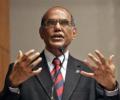
Is unhappy about banks' reluctance to pass on lower interest rates.

Dr Nagesh Kumar, one of the three new MPC members, wanted the MPC to reduce the repo rate by 25 basis points to 6.25%.

RBI unsure whether to cut rates or not in its next monetary policy.

'Investors can consider staying invested in long duration products as there is a possibility of rate cuts in the near term.' Positive macros - lower inflation, high forex reserves and favourable demand-supply dynamics for government bonds - make a strong case for rate cuts from December, says Devang Shah, head of fixed income, Axis Mutual Fund. In an interview with Abhishek Kumar in Mumbai, Shah says this view may not hold true if commodity prices go up sharply.

The growth was primarily driven by domestic investments, which accounted for 60 per cent of the total inflows during the first quarter of the financial year.


The US Federal Reserve's interest rate decision is the biggest event that would drive sentiments in the domestic stock market this week, besides a host of macroeconomic data from the global front and trading activity of foreign investors, analysts said. The Indian equity market had an exceptional last week, with both the Nifty and Sensex hitting their all-time high levels on Thursday.
Recent measures by Indian government to push economic reforms have dispelled fears of policy paralysis, while some more steps are needed for reviving investments and ensuring that household savings go into productive sectors, top banker Chanda Kochhar said.
